
7 sleep sacks tested. Hundreds of nights logged. Here’s what we actually use.
Sleep sacks are the product category where I went from “do we
really need this?” to “we own seven of them and I have opinions about
TOG ratings.” If you’d told me a year ago I’d care deeply about the
thermal resistance of a baby blanket, I would have laughed. I’m not
laughing anymore.
The basic premise is simple: loose blankets in a crib are a
suffocation risk (the AAP is very clear on this), so sleep sacks are
wearable blankets that keep your baby warm without the danger. But
within that simple concept, there’s a surprising amount of variation
— different TOG ratings for different temperatures, bamboo vs.
cotton vs. merino wool, weighted vs. standard, and zippers that range
from brilliant to infuriating.
After cycling through seven different sleep sacks across multiple
seasons, I’ve learned that the material and TOG rating matter more
than brand prestige. Your baby doesn’t care about Instagram aesthetics
at 2 AM — they care about being the right temperature. So
that’s how I ranked these.

PurComfy Supersoft Sleep Sack 1.0 TOG Bamboo Viscose
Buttery-soft bamboo viscose with a perfect 1.0 TOG rating — the Goldilocks sleep sack for year-round room temps.
Best overall — ideal warmth rating and bamboo softness for everyday use
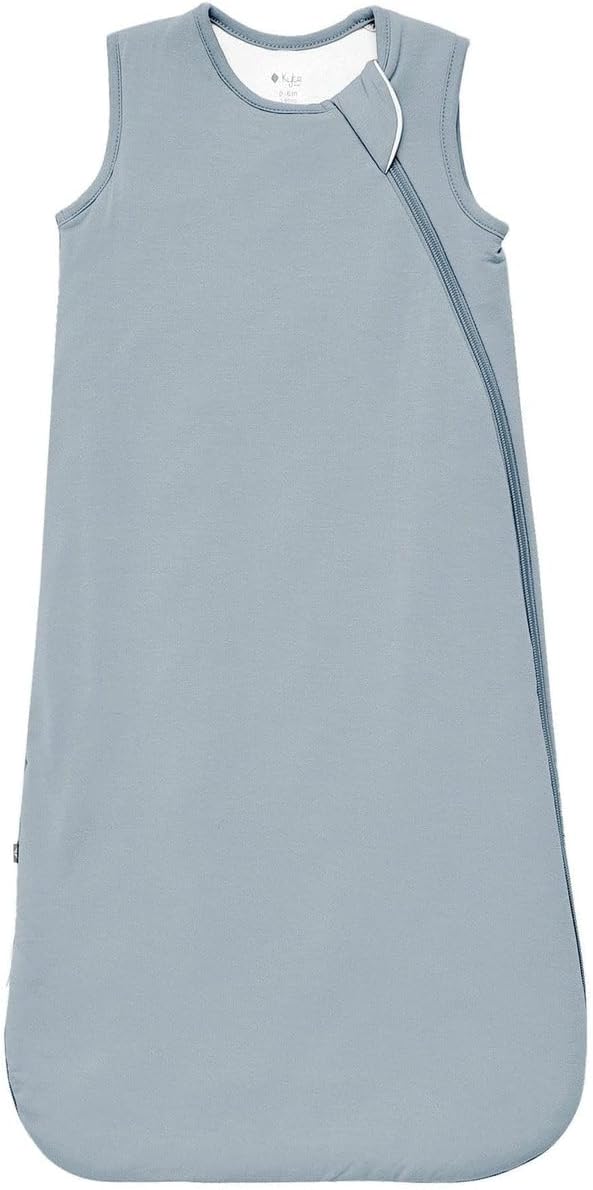
KYTE BABY Sleeping Bag 0.5 TOG Bamboo
Premium bamboo rayon in the softest fabric you’ve ever touched — the gold standard for warm-weather sleep.
Best for warm months — ultra-lightweight 0.5 TOG in premium bamboo
What to Look For in a Sleep Sack
TOG Rating. This measures thermal resistance.
Lower TOG = cooler (0.2-0.5 for summer or warm rooms), medium TOG =
year-round (1.0 for 68-72°F rooms), higher TOG = warmer (2.5+
for cold rooms). Get the TOG wrong and your baby wakes up —
either too hot (which is also a safety concern) or too cold. Most
families need at least two: one for summer, one for winter.
Material. Bamboo viscose is the current gold
standard — it’s soft, breathable, moisture-wicking, and
temperature-regulating. Organic cotton is the classic choice: durable,
affordable, and chemical-free. Merino wool is premium but self-
regulates temperature across seasons. Each has trade-offs in softness,
durability, and price.
Zipper Design. You will change diapers in the
dark while half-asleep. A 2-way zipper that opens from the bottom
means you don’t have to fully unzip the sack or wake the baby more
than necessary. This sounds minor until you’ve experienced the
alternative at 3 AM.
Sizing & Fit. Too big and baby can slide
down inside (dangerous). Too small and it restricts movement. Most
brands use age ranges (0-6M, 6-18M, etc.), but check weight and
length charts. Loose around the hips for healthy hip development,
snug around the chest so it doesn’t ride up.
Swaddle vs. Sleep Sack. Swaddles are for
newborns (0-3 months) and wrap the arms to reduce the startle
reflex. Sleep sacks are for when baby can roll over (typically 3-4
months) and leave the arms free. Some products bridge both
stages.
All 7 Sleep Sacks & Swaddles Reviewed
1. PurComfy Supersoft Sleep Sack 1.0 TOG Bamboo Viscose Pragmatic Pick
Best overall — ideal warmth rating and bamboo softness for everyday use
The PurComfy Supersoft was actually a recommendation from our
pediatrician’s office — one of the nurses mentioned it during
a well visit, and I’m glad she did. The bamboo viscose fabric is
noticeably softer than the cotton sacks we started with. Owen didn’t
fuss when we put it on, which is the ultimate baby product test.
The 1.0 TOG rating is what makes this the everyday workhorse. Our
nursery sits around 69-71°F year-round (because apparently I now
care about room temperature to the degree), and the PurComfy handles
that range perfectly. In winter with the heat on, it works. In
summer with the AC running, it works. We don’t have to think about
switching sacks with the seasons, which is one fewer decision in a
life that’s already drowning in baby-related decisions.
The 2-way bottom zipper is excellent for nighttime diaper changes
— unzip from the bottom, change the diaper, zip back up, baby
barely stirs. The sizing runs true, and we’ve moved through the 0-6M
and 6-18M sizes without issues. At its price point, we bought three
so we always have one clean, one in the wash, and one in the diaper
bag. That’s not something you casually do with a $50 sleep sack.
| Type | Sleep Sack |
| TOG Rating | 1.0 TOG |
| Material | Bamboo Viscose |
| Sizes | 0–6M, 6–18M, 18–36M |
| Zipper | 2-way bottom zipper |
| Arms Design | Sleeveless |
| Machine Washable | Yes |
| Price Range | $ |
What We Like
- 1.0 TOG works for most room temperatures (68–72°F)
- Bamboo viscose is incredibly soft against baby’s skin
- 2-way zipper makes midnight diaper changes easy
- Best price-to-quality ratio in this roundup
- Available from newborn through 36 months
Worth Noting
- Limited color and pattern selection
- Bamboo viscose wrinkles easily in the dryer
- Not warm enough for very cold rooms (below 65°F)
2. KYTE BABY Sleeping Bag 0.5 TOG Bamboo Runner-Up
Best for warm months — ultra-lightweight 0.5 TOG in premium bamboo
KYTE BABY has achieved something remarkable in the baby product
world: actual brand loyalty. The parents who love KYTE really love
KYTE, and after trying their sleep sack, I understand why. The bamboo
rayon fabric is, without exaggeration, the softest material I’ve
encountered in any baby product. It feels expensive because it is.
The 0.5 TOG rating makes this a warm-weather specialist. For
summer months or warm nurseries (above 72°F), it’s ideal —
light enough that overheating isn’t a concern, but still providing
that cozy, contained feeling that helps babies sleep. The prints
and colors are genuinely beautiful, which shouldn’t matter but does
when you’re taking 8,000 photos of your sleeping baby.
The issue is versatility. At 0.5 TOG, this doesn’t work as a
year-round sack in most climates. You’ll need a second sack for
cooler months. And the price premium over comparable bamboo sacks
(like PurComfy) is significant. The quality justifies it — KYTE
sacks hold up beautifully through dozens of washes — but the
math is hard to ignore when you need multiple sacks in multiple sizes.
If budget isn’t the primary concern, KYTE is genuinely premium.
If it is, the PurComfy gets you 90% of the way there.
| Type | Sleep Sack |
| TOG Rating | 0.5 TOG |
| Material | Bamboo Rayon |
| Sizes | 0–6M, 6–18M, 18–36M |
| Zipper | 2-way zipper |
| Arms Design | Sleeveless |
| Machine Washable | Yes |
| Price Range | $$ |
What We Like
- Exceptionally soft bamboo rayon fabric
- 0.5 TOG perfect for summer and warm nurseries
- Beautiful colors and prints
- 2-way zipper for easy diaper changes
- Excellent size range with consistent fit
Worth Noting
- 0.5 TOG only — need a separate sack for cooler months
- Premium price for a sleep sack
- Bamboo rayon requires gentle wash cycle

3. Love to Dream Swaddle UP (0.2 TOG)
Best swaddle — patented arms-up design for natural self-soothing
The Love to Dream Swaddle UP solved a problem we didn’t know we
had. Owen hated traditional swaddles — the arms-down, burrito-
wrap kind. He’d fight out of them within minutes, which defeated
the entire purpose. The Swaddle UP’s arms-up design changed
everything: his hands are near his face (where he naturally wants
them), he can self-soothe by sucking on his fingers through the
fabric, and the startle reflex is still dampened.
The dual zipper design is smart — top zipper for putting
baby in, bottom zipper for diaper access. No wrapping technique to
master, no Velcro that wakes the baby with that terrible ripping
sound. It’s a zip-and-done swaddle that actually stays on.
The limitation is lifespan. This is a newborn product (0-6 months),
and once your baby starts rolling, you need to transition to a
sleep sack with free arms. Love to Dream makes a transitional version
(the 50/50) with removable wings, which helps bridge the gap. But
at $28-35 per swaddle across 2-3 sizes, the total investment adds up
for something you’ll use for four months. Still, for the newborn
stage specifically, the arms-up design is a genuinely better
approach for babies who resist traditional swaddling.
| Type | Swaddle |
| TOG Rating | 0.2 TOG |
| Material | Cotton / Elastane |
| Sizes | Newborn, S, M, L |
| Zipper | Dual zipper (top and bottom) |
| Arms Design | Arms UP (patented) |
| Machine Washable | Yes |
| Price Range | $$ |
What We Like
- Arms-up design lets babies self-soothe with hands near face
- Dual zipper for diaper changes without unwrapping
- Snug fit prevents startle reflex without restricting hips
- Transition wings available (Swaddle UP 50/50)
- Simple design — no complicated wrapping technique
Worth Noting
- Only useful during newborn stage (0–6 months)
- 0.2 TOG is very light — may need layering in cool rooms
- Some babies prefer arms-down swaddling
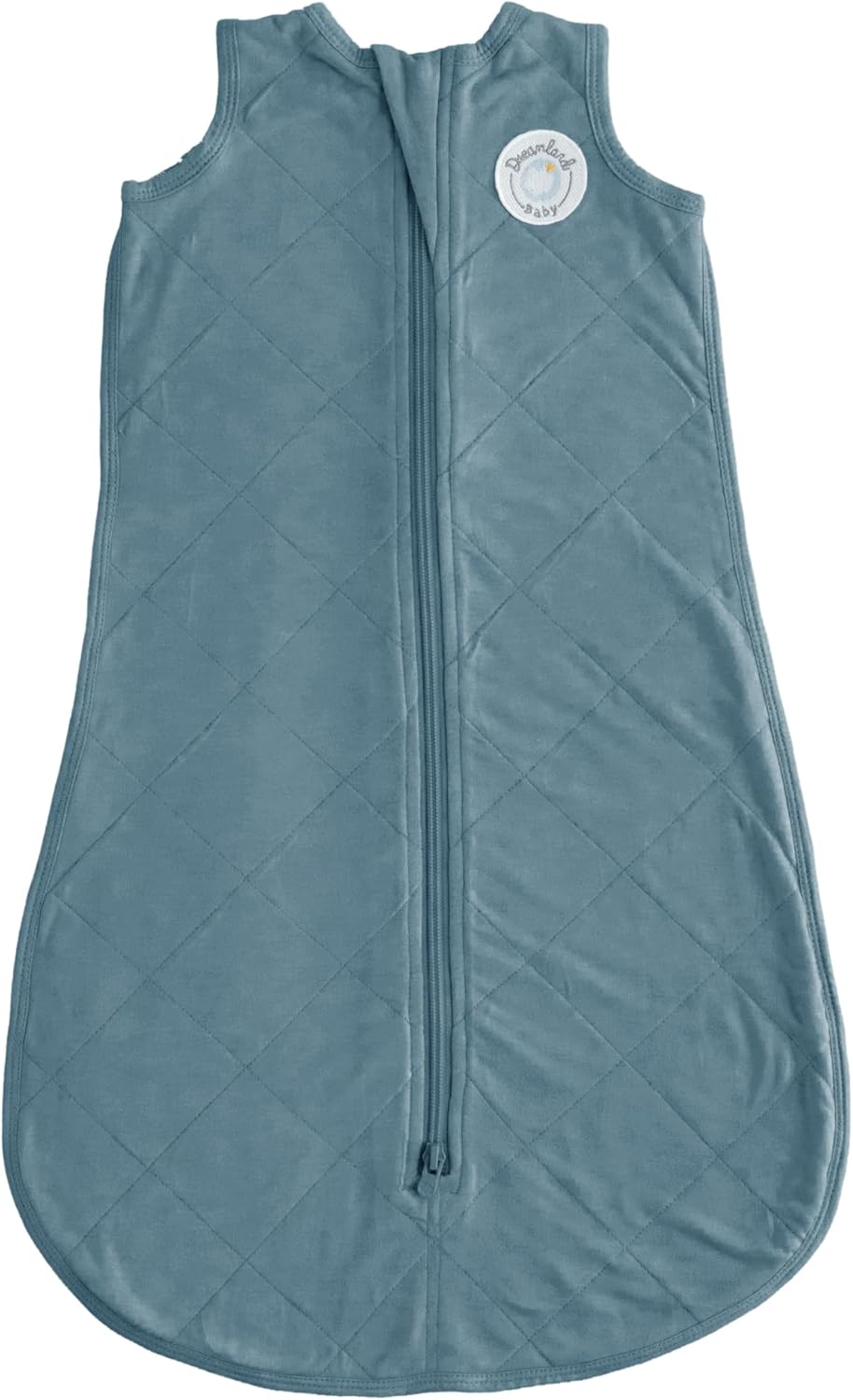
4. Dreamland Baby Lightweight Bamboo Viscose Sleep Sack
Best for restless sleepers — gentle weight provides calming pressure
The Dreamland Baby is the controversial pick in this roundup. A
gently weighted sleep sack that applies light pressure across the
chest and sides — similar to a weighted blanket for adults.
The science behind Deep Touch Pressure is real (it’s used in
occupational therapy), and Dreamland’s CoverCalm technology
distributes the weight evenly.
Did it work for Owen? Honestly, yes. On nights when he was
particularly restless, the Dreamland sack seemed to settle him faster
than the unweighted alternatives. It’s not magic — it didn’t
replace good sleep hygiene or a consistent bedtime routine — but
it added a noticeable calming effect.
The caveats are important: the AAP hasn’t issued specific guidance
on weighted sleep sacks, and some pediatricians advise against them.
Talk to your doctor before using one. The Dreamland is also the most
expensive option here, and the weighted inserts mean longer drying
times after washing. For restless sleepers whose pediatrician
approves, it’s worth trying. For everyone else, an unweighted bamboo
sack (like PurComfy) is the simpler, cheaper, less-debated
choice.
| Type | Weighted Sleep Sack |
| TOG Rating | 0.8 TOG |
| Material | Bamboo Viscose |
| Sizes | 0–6M, 6–12M, 12–24M |
| Zipper | 2-way zipper |
| Arms Design | Sleeveless |
| Machine Washable | Yes |
| Price Range | $$$ |
What We Like
- CoverCalm weighted pad provides gentle Deep Touch Pressure
- Bamboo viscose is breathable and soft
- 2-way zipper for midnight diaper changes
- Pediatrician-approved design
- Multiple sizes for extended use
Worth Noting
- Most expensive option in this roundup
- Weighted design — check with pediatrician before use
- Takes longer to dry due to weighted inserts

5. Woolino 4 Season Ultimate Baby Sleep Sack
Best 4-season — merino wool self-regulates temperature year-round
The Woolino is the sleep sack for parents who want to buy one
product and be done with it. Merino wool naturally regulates body
temperature — it warms when it’s cold and cools when it’s warm.
This means one sleep sack works across all four seasons instead of
buying separate sacks for summer and winter. The one-size design
(2-24 months) means you don’t even need to size up.
The organic cotton lining is soft against baby’s skin (not
scratchy like you might expect from wool), and merino is naturally
moisture-wicking and odor-resistant. After months of use, the Woolino
still looks and smells fresh between washes. The quality is
undeniably premium.
The barrier is price. The Woolino costs roughly 3-4x what a bamboo
sleep sack costs. The argument that it replaces multiple seasonal
sacks has merit — if you’d otherwise buy three sacks across
three TOG ratings, the Woolino might actually save money. But that’s
a bet on the future, and most parents are managing cash flow in the
present. The side zipper is also less convenient than 2-way designs
for diaper changes. For parents who value buy-once quality and hate
shopping, the Woolino is the premium choice that simplifies
everything.
| Type | Sleep Sack |
| TOG Rating | ~1.0–2.0 (self-regulating) |
| Material | Merino Wool + Organic Cotton lining |
| Sizes | 2–24 months (one size) |
| Zipper | Side zipper |
| Arms Design | Sleeveless |
| Machine Washable | Yes (wool cycle) |
| Price Range | $$$ |
What We Like
- Merino wool naturally regulates body temperature — one sack for all seasons
- One size fits 2–24 months — no need to buy multiple sizes
- Organic cotton lining is gentle on sensitive skin
- Naturally moisture-wicking and odor-resistant
- Machine washable on wool cycle
Worth Noting
- High upfront cost (but replaces multiple season-specific sacks)
- Merino wool requires gentle washing
- Side zipper is less convenient than 2-way zippers
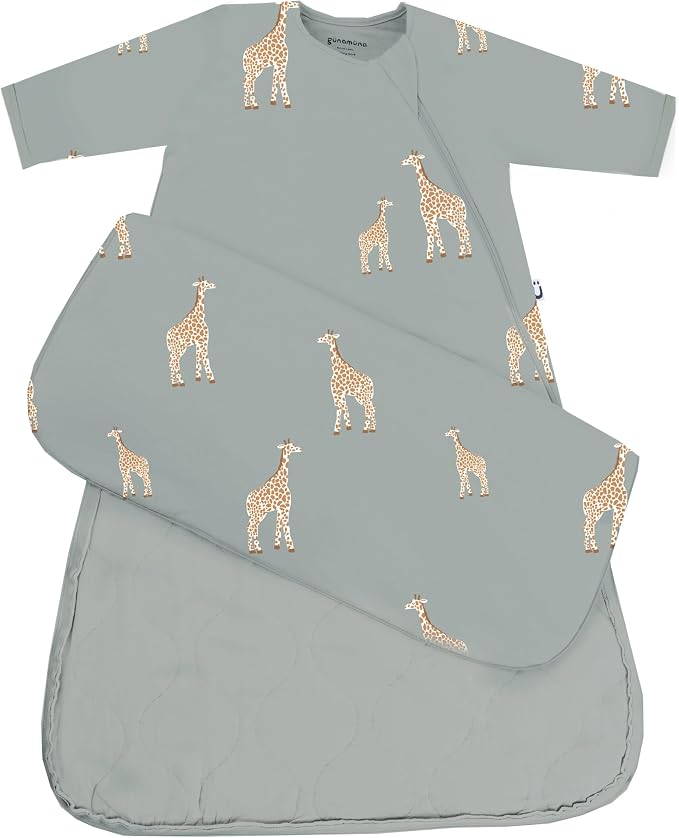
6. Gunamuna Bamboo Rayon Wearable Blanket with Diaper Zipper
Best for diaper changes — unique bottom zipper design for quick access
The Gunamuna’s selling point is the diaper zipper, and it’s a
genuinely clever innovation. Instead of unzipping the entire sleep
sack from the top for a diaper change, the Gunamuna opens from the
bottom — the legs splay open while the chest stays zipped and
warm. Baby barely wakes up, you change the diaper, zip back up,
done.
This sounds like a small thing, but multiply it by 2-3 nighttime
diaper changes and 365 nights, and it’s a significant quality-of-life
improvement. The bamboo rayon fabric is soft and breathable (not
quite KYTE BABY level, but close), and the 1.0 TOG rating makes it a
solid year-round option.
The design was created by parent-founders, and the attention to
practical details shows. The downside is price — the diaper
zipper innovation comes with a premium over basic bamboo sacks. And
the zipper does take a couple of nights to figure out in the dark
(the opening direction is different from what you’re used to). Once
you’ve got the muscle memory, though, it’s faster than any
alternative. If nighttime diaper changes are your biggest sleep
disruption, the Gunamuna directly solves that problem.
| Type | Sleep Sack |
| TOG Rating | 1.0 TOG |
| Material | Bamboo Rayon |
| Sizes | 0–3M, 3–9M, 9–18M, 18–24M |
| Zipper | Diaper zipper (bottom opens wide) |
| Arms Design | Sleeveless |
| Machine Washable | Yes |
| Price Range | $$ |
What We Like
- Patented diaper zipper opens from the bottom — no full unzipping
- Bamboo rayon is soft and breathable
- Baby stays warm during diaper changes
- Multiple size options for extended use
- Thoughtful design by parent-founders
Worth Noting
- Slightly pricier than basic bamboo options
- Limited availability in some sizes
- Diaper zipper takes a night or two to get used to
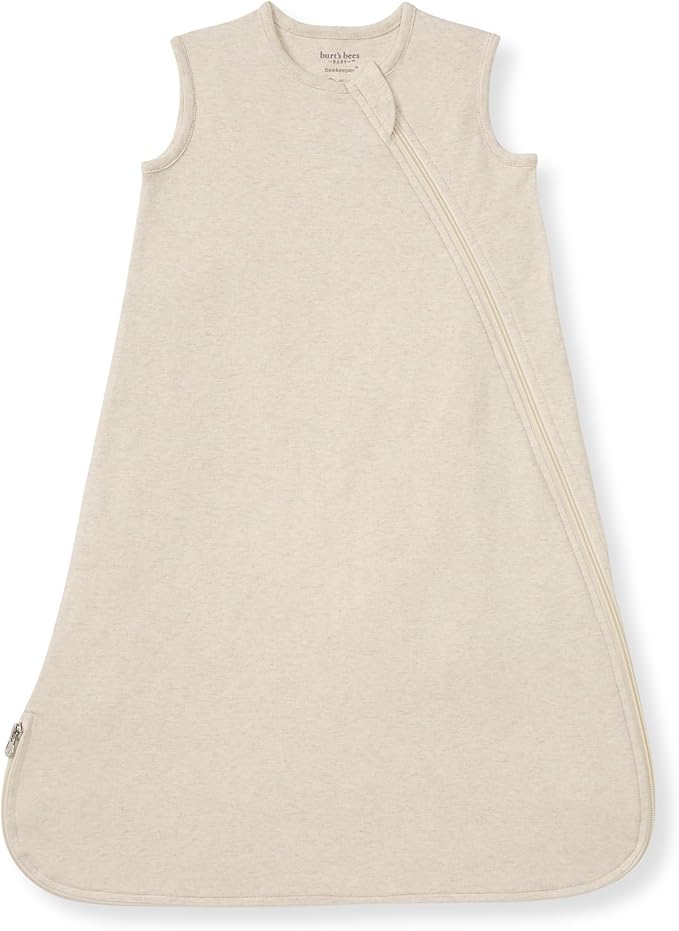
7. Burt’s Bees Baby Beekeeper Organic Cotton Sleep Sack
Best organic option — certified organic cotton at the most affordable price
Burt’s Bees is the brand you already trust from their baby
shampoo and lotion, and the Beekeeper sleep sack carries that same
ethos: simple, organic, no-nonsense. The GOTS-certified organic
cotton means the fabric was grown without synthetic pesticides or
fertilizers, processed without harmful chemicals, and certified by an
independent third party. For parents who care about what touches
their baby’s skin, this certification is the gold standard.
The cotton fabric is comfortable and durable — it softens
with each wash and holds up well over time. The prints are classic
Burt’s Bees: nature-inspired, gender-neutral options that look cute
without being obnoxious. And the price is right — it’s one of
the most affordable sleep sacks in this roundup.
The honest trade-off: cotton isn’t as soft as bamboo viscose.
After trying both, the difference is noticeable — bamboo has
a silky drape that cotton doesn’t match. The front zipper is basic
(no 2-way option), which means full unzipping for diaper changes.
And some parents report it runs small, so consider sizing up.
But for an organic, certified, affordable sleep sack that does the
job without any fuss, Burt’s Bees is a solid no-frills choice.
| Type | Sleep Sack |
| TOG Rating | ~0.5–1.0 TOG |
| Material | 100% Organic Cotton (GOTS certified) |
| Sizes | 0–6M, 6–12M, 12–18M |
| Zipper | Front zipper |
| Arms Design | Sleeveless |
| Machine Washable | Yes |
| Price Range | $ |
What We Like
- GOTS certified organic cotton — no pesticides or chemicals
- Most affordable organic option
- Soft, breathable cotton
- Widely available in stores
- Simple, classic prints
Worth Noting
- Cotton isn’t as soft as bamboo viscose
- No 2-way zipper (basic front zip only)
- Runs slightly small — consider sizing up
Why PurComfy Supersoft Is the Pragmatic Pick
The PurComfy won because it nails the Goldilocks zone: not too
hot, not too cold, not too expensive, not too basic. The 1.0 TOG
rating works for the temperature range where most nurseries actually
live (68-72°F), which means it’s the one sleep sack you reach for
most nights of the year.
The bamboo viscose fabric is genuinely buttery — softer than
cotton, more breathable than polyester, and it drapes nicely without
bunching up. The 2-way zipper opens from the bottom for diaper
changes, which is the kind of feature you don’t appreciate until
you’ve wrestled with a top-down zipper in the dark. And the price?
It’s the best value in this category. Not the absolute cheapest, but
the best ratio of quality-to-cost.
KYTE BABY earned runner-up because the fabric quality is
exceptional — it’s the softest sleep sack I’ve touched, and
their color range is beautiful. The 0.5 TOG rating makes it the
perfect summer sack. But it’s a warm-weather specialist at a premium
price, while the PurComfy is a year-round workhorse at a lower one.
For most families buying their first sleep sack, PurComfy is the
pragmatic starting point. Add a KYTE BABY for summer if the budget
allows.
Frequently Asked Questions
When should I stop swaddling and switch to a sleep sack?
Stop swaddling as soon as your baby shows signs of rolling over, which typically happens between 2 and 4 months. Rolling while swaddled is dangerous because the baby can't use their arms to push up if they roll face-down. Transition to an arms-free sleep sack at this point. Some transitional products like the Love to Dream Swaddle Up allow arms-up swaddling that's easier to wean from than traditional tight swaddles.
What TOG rating sleep sack does my baby need?
TOG measures thermal resistance. For a room temperature of 68-72°F (20-22°C), a 1.0 TOG sleep sack with a standard pajama underneath works well. For warmer rooms above 75°F, use a 0.5 TOG or lighter. For cooler rooms below 68°F, a 2.5 TOG provides extra warmth. Always check your baby's chest or back (not hands or feet) to gauge temperature — they should feel warm but not sweaty.
Are weighted sleep sacks safe for babies?
The AAP has not issued a specific recommendation on weighted sleep sacks, and opinions among pediatricians vary. Products like the Dreamland Baby use evenly distributed weight (not concentrated in one area) that mimics the gentle pressure of a hand on the chest. If you choose a weighted sleep sack, ensure the weight is no more than 10% of your baby's body weight, the weight is evenly distributed, and your baby can still move freely. Always consult your pediatrician first.
What is the difference between a swaddle and a sleep sack?
A swaddle wraps snugly around your baby's body including the arms, mimicking the tight feeling of the womb. It's designed for newborns up to about 2-4 months. A sleep sack is a wearable blanket with arm holes that keeps baby warm without loose bedding — it replaces blankets in the crib. Sleep sacks are used from birth through toddlerhood. The key difference is arm restriction: swaddles contain the arms, sleep sacks leave them free.
Can my baby overheat in a sleep sack?
Yes, if the TOG rating is too high for your room temperature or your baby is over-dressed underneath. Signs of overheating include sweating, damp hair, flushed cheeks, rapid breathing, and a hot chest. Use a lower TOG rating in warmer months, dress baby in just a diaper or light onesie underneath in summer, and keep the room between 68-72°F. Breathable fabrics like bamboo and cotton regulate temperature better than polyester.
Head-to-Head Comparisons
Want to see how any two stack up directly? Pick a matchup:
- PurComfy Supersoft vs KYTE BABY
- PurComfy Supersoft vs Love to Dream
- PurComfy Supersoft vs Dreamland Baby
- PurComfy Supersoft vs Woolino
- PurComfy Supersoft vs Gunamuna
- PurComfy Supersoft vs Burt’s Bees Beekeeper
- KYTE BABY vs Love to Dream
- KYTE BABY vs Dreamland Baby
- KYTE BABY vs Woolino
- KYTE BABY vs Gunamuna
- KYTE BABY vs Burt’s Bees Beekeeper
- Love to Dream vs Dreamland Baby
- Love to Dream vs Woolino
- Love to Dream vs Gunamuna
- Love to Dream vs Burt’s Bees Beekeeper
- Dreamland Baby vs Woolino
- Dreamland Baby vs Gunamuna
- Dreamland Baby vs Burt’s Bees Beekeeper
- Woolino vs Gunamuna
- Woolino vs Burt’s Bees Beekeeper
- Gunamuna vs Burt’s Bees Beekeeper
As an Amazon Associate and affiliate partner, New Pragmatic Dad earns from qualifying purchases. This doesn’t affect our recommendations — we only suggest products we’d buy ourselves.