
6 sleep spaces tested. 1 pragmatic pick. Where your baby actually sleeps best.
The bassinet-vs-crib decision hit me harder than I expected.
Before Owen arrived, I assumed you just bought a crib and called it
done. Then I learned that newborns are supposed to sleep in the same
room as you for at least six months (per the AAP), that bassinets
exist for exactly this purpose, and that some families end up buying
both. The rabbit hole goes deep.
Here’s the thing nobody tells you: the “best” sleep space depends
entirely on your living situation. A Manhattan studio apartment has
different needs than a four-bedroom house. A C-section recovery
requires different accessibility than an uncomplicated delivery. And
your budget reality — because let’s be honest, you just spent
a fortune on hospital bills — shapes the decision more than
any product review will admit.
I tested six of the most popular bassinets and cribs across three
categories: bedside bassinets for the newborn months, convertible cribs
for the long haul, and portable options for flexible families. Every
one of these passed safety certifications. The differences come down
to usability, value, and how well they fit your actual life.
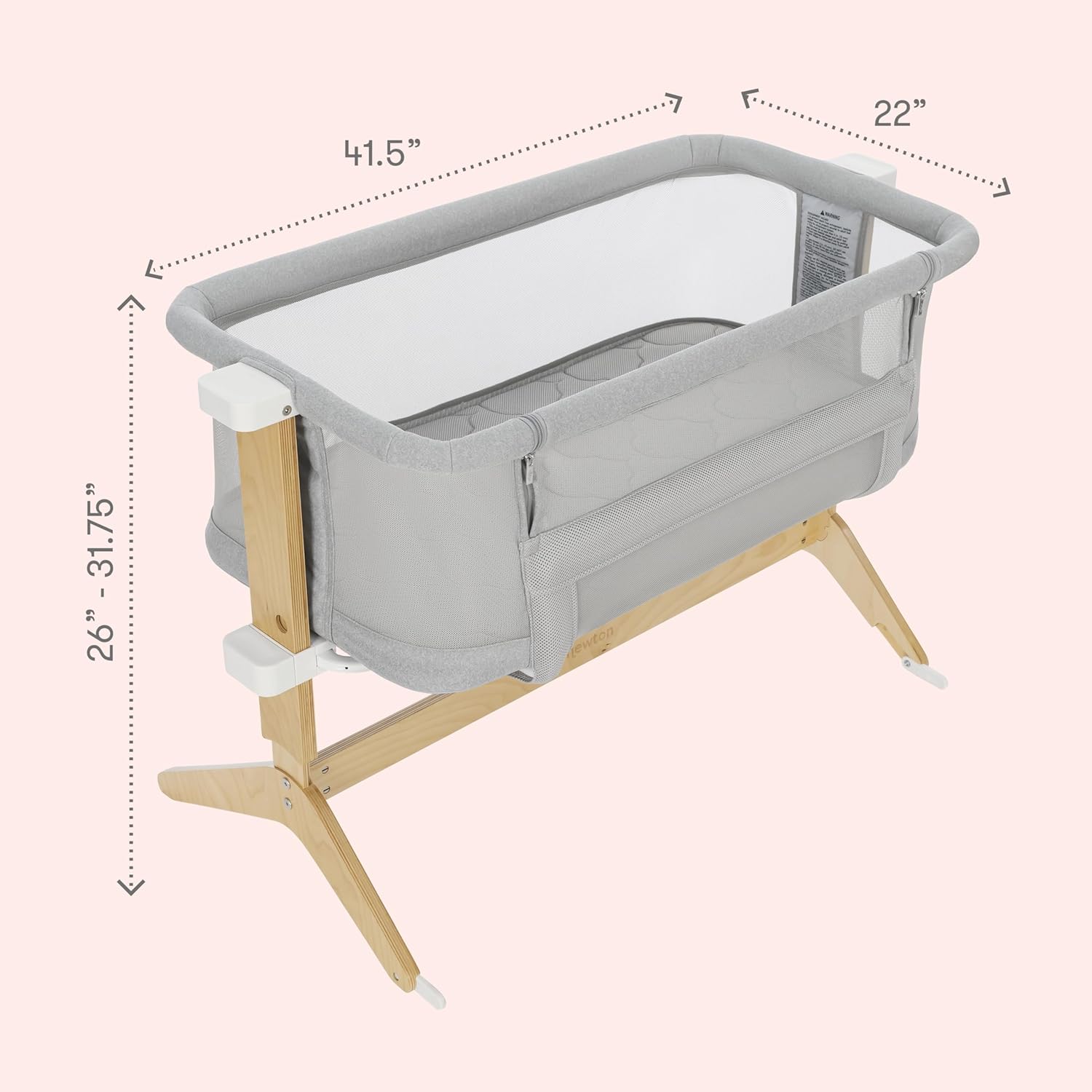
Newton Baby Bassinet & Bedside Sleeper with Mattress
Breathable Wovenaire mattress with bedside sleeper functionality — the safest sleep surface I’ve tested.
Best overall — unmatched breathability and safety for bedside sleeping

Graco Benton 5-in-1 Convertible Crib
Budget-friendly 5-in-1 design that grows from crib to full-size bed — the best value for long-term use.
Best value crib — 5-in-1 convertibility at a budget price point
What to Look For in a Bassinet or Crib
Safety Certifications. This is non-negotiable.
Every product on this list meets CPSC standards, and most carry JPMA
certification. Never buy a sleep space without these. No vintage
cribs, no hand-me-downs without verified safety standards, no
exceptions.
Mattress Quality. Firm and flat — that’s the
AAP recommendation. Some bassinets include excellent mattresses;
others include a thin pad that you’ll want to upgrade. Breathable
mattress materials (like Newton’s Wovenaire) add genuine peace of
mind but cost more.
Bassinet vs. Crib Timing. Bassinets are for 0-5
months (or until baby can push up / roll over). Cribs are for 0 months
through toddlerhood. Many families use a bassinet first, then
transition to a crib. Convertible cribs offer the longest runway
— some convert all the way to adult beds.
Portability. Can it move between rooms? Does it
fold for travel or storage? Wheels with locks are ideal for bassinets.
Cribs are typically stationary — mini cribs with wheels are the
exception.
Long-Term Value. A $200 crib that converts to a
toddler bed, daybed, and full-size bed is arguably a better investment
than a $350 bassinet you’ll use for four months. Think about total
cost of ownership, not just the sticker price.
All 6 Bassinets & Cribs Reviewed
1. Newton Baby Bassinet & Bedside Sleeper with Mattress Pragmatic Pick
Best overall — unmatched breathability and safety for bedside sleeping
The Newton Baby Bassinet is the product that made me understand
why some parents spend more on baby gear. The Wovenaire core —
Newton’s proprietary mattress technology — is 90% air by
volume. That’s not a typo. The mattress is essentially a grid of food-grade
polymer that allows airflow from every direction. If your baby
rolls face-down (which will happen), they can breathe right through
the mattress.
Does this eliminate SIDS risk? No, and Newton doesn’t claim that.
But it addresses the specific suffocation concern that haunts every
new parent. Combined with the mesh sides that provide 360° airflow,
this is the most breathable sleep environment I tested.
The bedside sleeper functionality is well-executed. The height
adjusts to match your bed, the sidewall lowers for nighttime access,
and wheels with locks let you reposition it. The entire bassinet folds
down to a manageable size when you’re done with it. The mattress and
cover are fully washable — which matters more than you think
once you experience your first middle-of-the-night diaper blowout.
Yes, it’s the most expensive bassinet here. But for the sleep stage
where anxiety runs highest, the investment felt justified.
| Type | Bedside Bassinet |
| Weight Limit | Up to 20 lbs |
| Converts To | N/A |
| Mattress Included | Yes (Wovenaire breathable) |
| Portability | Wheels + compact fold |
| Material | Mesh sides + alloy frame |
| Certifications | CPSC, JPMA, Greenguard Gold |
| Price Range | $$$ |
| Age Range | 0–5 months |
What We Like
- Wovenaire breathable mattress — baby can literally breathe through it
- Adjustable height fits most bed heights
- Locking wheels for easy room-to-room moves
- Mesh sides provide 360° airflow
- Mattress is fully washable (core and cover)
Worth Noting
- Most expensive bassinet in this roundup
- Smaller sleep surface than a mini crib
- No storage shelf underneath
2. Graco Benton 5-in-1 Convertible Crib Runner-Up
Best value crib — 5-in-1 convertibility at a budget price point
The Graco Benton is proof that you don’t need to spend a fortune
to get a safe, reliable crib. At its price point, the 5-in-1
convertibility is genuinely remarkable: crib, toddler bed, daybed,
full-size headboard, and full-size headboard-and-footboard. That’s
potentially 15+ years of use from one purchase.
The build quality is solid — not premium, but solid. Pine
wood and composite construction feels sturdy once assembled. Three
adjustable mattress heights let you lower the mattress as your baby
learns to pull up (you’ll want to do this before they figure it out,
trust me). The classic design is intentionally neutral, which means
it fits any nursery theme without looking dated.
The trade-offs are predictable at this price: mattress is sold
separately (budget another $80-120 for a good one), and the full-size
bed conversion rails are also extra. Assembly takes about 45 minutes
and requires two people. But the math works: even with a separate
mattress and conversion kit, you’re spending less than most premium
cribs alone. For families who want to buy once and be done, the
Graco Benton is the pragmatic crib choice.
| Type | 5-in-1 Convertible Crib |
| Weight Limit | 50 lbs (toddler mode) |
| Converts To | Toddler bed, daybed, full headboard, full bed |
| Mattress Included | No |
| Portability | Stationary |
| Material | Pine wood + composite |
| Certifications | CPSC, JPMA, ASTM |
| Price Range | $ |
| Age Range | 0 months – adult (with conversions) |
What We Like
- 5-in-1 design lasts from birth to adulthood
- Most affordable full-size crib in this roundup
- Three adjustable mattress heights
- Classic design fits any nursery style
- JPMA certified for safety
Worth Noting
- Mattress sold separately
- Conversion kits for full bed sold separately
- Heavy and not portable
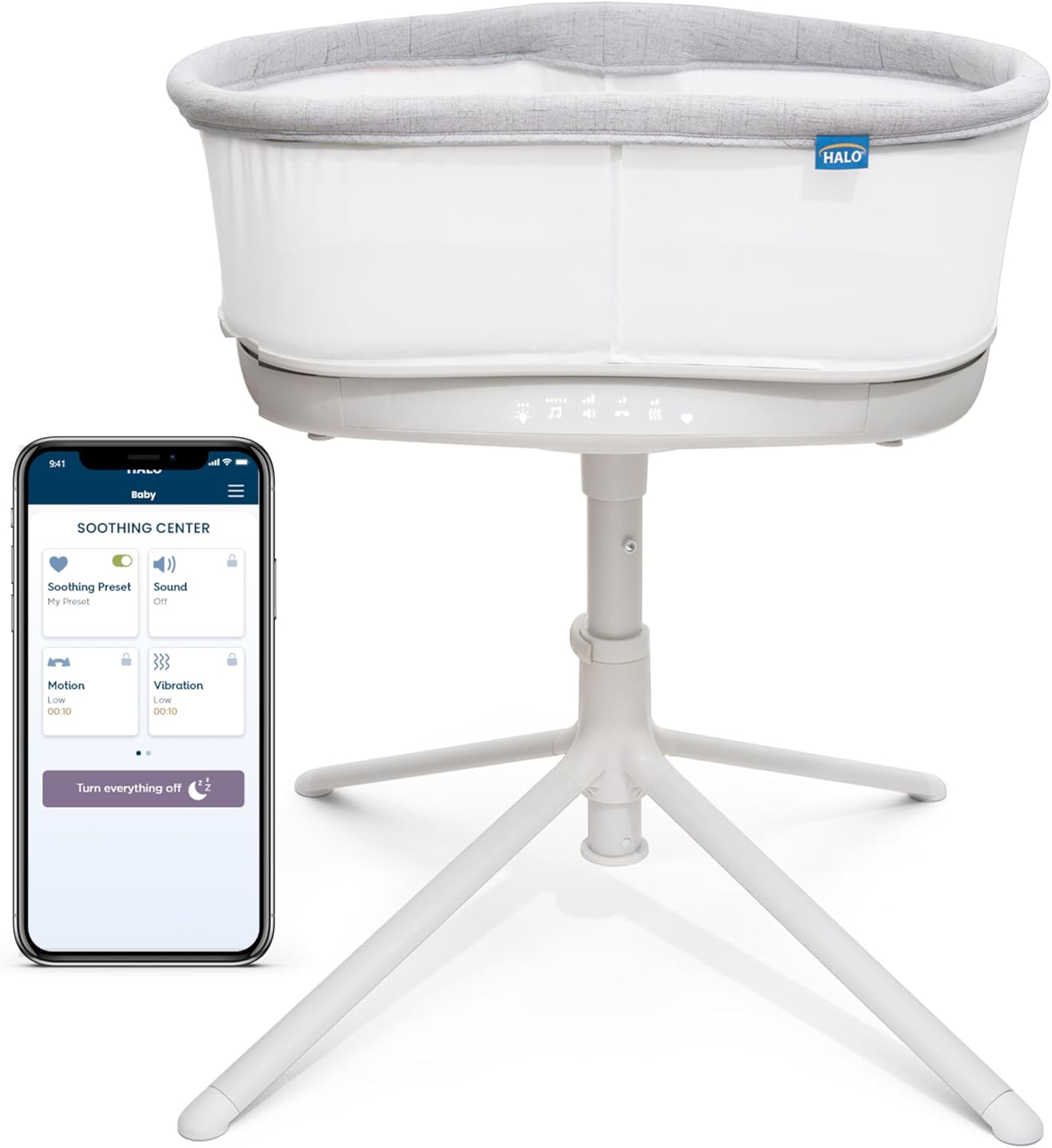
3. HALO BassiNest Swivel Sleeper 3.0
Best for night feeds — 360° swivel puts baby right beside you
The HALO BassiNest is the bassinet that hospitals use, and there’s
a reason: the 360° swivel design is brilliant for post-delivery
recovery. After a C-section, you physically cannot lean over a
standard bassinet without significant pain. The BassiNest swivels
over your bed and the sidewall drops down — you can reach Owen
without sitting up.
The soothing center adds vibration, nature sounds, and a nightlight,
which seems gimmicky until you’re desperately rocking a fussy baby
at 4 AM and the vibration actually works. The mesh walls provide
good visibility and airflow. The adjustable height accommodates most
bed frames, and the base tucks under many bed frames to save floor
space.
The downside: it’s essentially immobile. The base is large, there
are no wheels, and repositioning requires effort. If you want to move
your bassinet to the living room during the day, this isn’t your
pick. It’s purpose-built for one thing — bedside sleeping
— and it does that one thing exceptionally well. For
C-section recovery specifically, nothing else comes close.
| Type | Bedside Bassinet |
| Weight Limit | Up to 20 lbs |
| Converts To | N/A |
| Mattress Included | Yes (waterproof) |
| Portability | Adjustable base (no wheels) |
| Material | Mesh walls + polyester |
| Certifications | CPSC, JPMA |
| Price Range | $$ |
| Age Range | 0–5 months |
What We Like
- 360° swivel rotation brings baby directly to you
- Sidewall lowers for easy nighttime access
- Adjustable height and tilt for reflux babies
- Mesh walls for breathability
- Soothing center with vibration, sounds, and nightlight
Worth Noting
- Large base footprint — needs space under/beside bed
- Heavier than portable bassinets
- Not easily moved between rooms
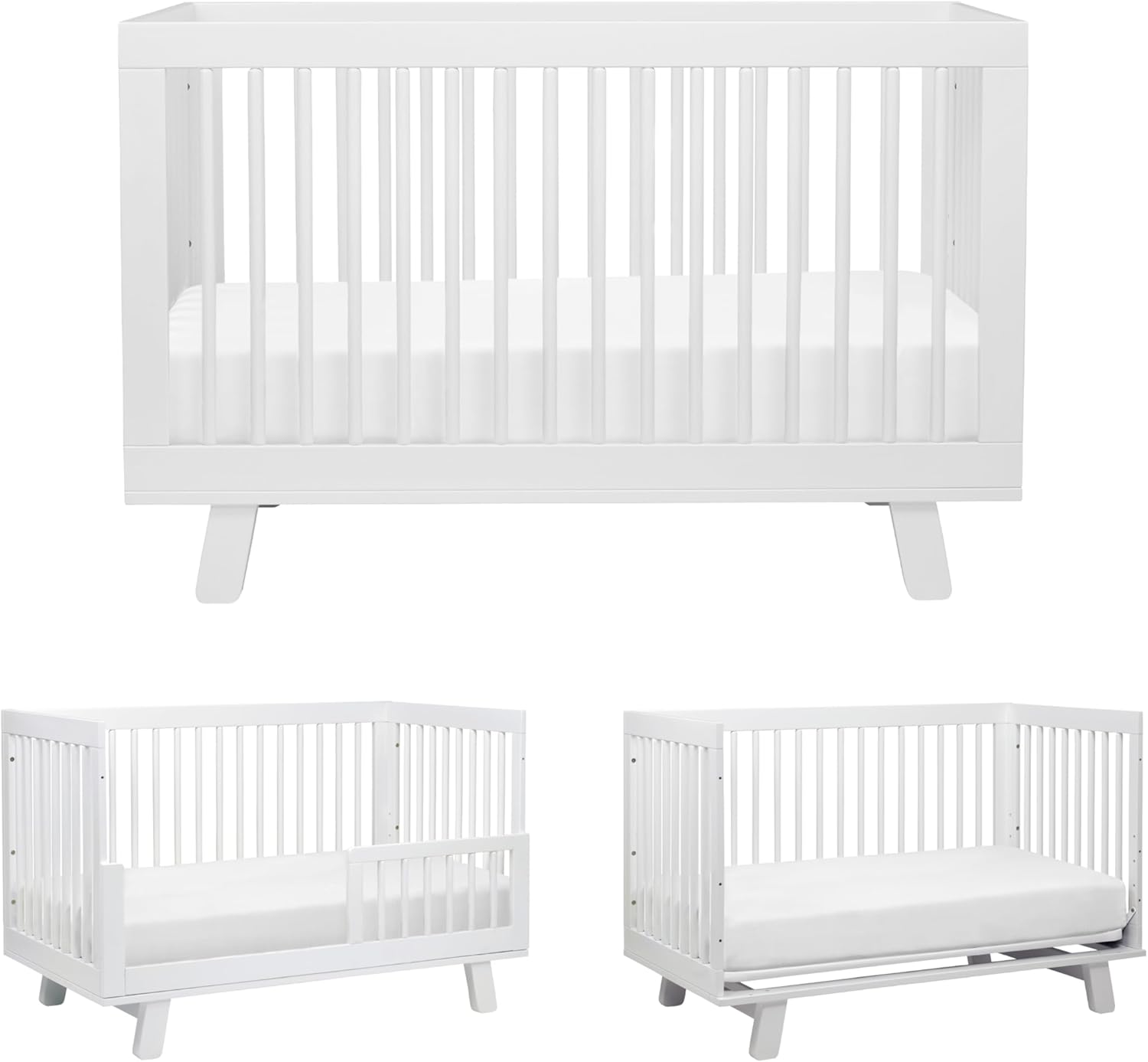
4. Babyletto Hudson 3-in-1 Convertible Baby Crib
Best design — mid-century modern aesthetics with premium non-toxic materials
Let’s be honest: most cribs are ugly. The Babyletto Hudson is not.
The mid-century modern design with rounded spindles and a low profile
looks like it belongs in a design magazine, and it’s the crib that
gets the most compliments from visitors. If your nursery aesthetic
matters to you (and it’s okay if it does), this is the one.
But it’s not just looks. The Greenguard Gold certification means
this crib has been tested for over 10,000 chemical emissions and
VOCs. For a piece of furniture your baby will spend 10-12 hours a
day in, that matters. The sustainable New Zealand pine feels premium,
four mattress positions give you adjustment flexibility, and the
toddler bed conversion kit is included (not an upsell).
The reality check: it’s a 3-in-1, not a 5-in-1, at a premium
price. The Graco Benton does more conversions at less than half the
cost. If pure value is your metric, Babyletto loses. But if you want
the intersection of design, sustainability, and safety — and
you’re willing to pay for it — the Hudson is genuinely
beautiful furniture that happens to be an excellent crib.
| Type | 3-in-1 Convertible Crib |
| Weight Limit | 50 lbs (toddler mode) |
| Converts To | Toddler bed, daybed |
| Mattress Included | No |
| Portability | Stationary |
| Material | Sustainable New Zealand pine |
| Certifications | Greenguard Gold, CPSC, JPMA |
| Price Range | $$$ |
| Age Range | 0 months – toddler |
What We Like
- Greenguard Gold certified — lowest chemical emissions
- Beautiful mid-century modern design
- Sustainable New Zealand pine construction
- 4 adjustable mattress positions
- Toddler conversion kit included
Worth Noting
- Premium price for a 3-in-1 (vs Graco’s 5-in-1 at half the cost)
- Mattress sold separately
- Assembly can be time-consuming

5. Delta Children Folding Portable Mini Baby Crib
Best for small spaces — folds flat and rolls anywhere
The Delta Folding Mini Crib solves a specific problem: you need a
real crib, but you don’t have room for one. Maybe it’s a small
apartment, maybe it’s a second sleep space at grandma’s house, maybe
you travel and want something sturdier than a Pack ‘n Play. The Delta
folds flat, has locking wheels, and takes up about 60% of the
footprint of a standard crib.
The folding mechanism is genuinely quick — about 15 seconds
to collapse, no tools required. When folded, it slides behind a
door or into a closet. The locking wheels mean you can roll it
between rooms easily, which is something fixed cribs can’t do at
all.
The main compromise is the included mattress pad — it’s a
1-inch pad that technically meets safety standards but isn’t what
you’d choose for primary nightly use. Most parents buy a proper mini
crib mattress separately. Also, mini crib mattresses are a specific
size (24” x 38”) with fewer options and slightly higher
prices than standard. But for the flexibility and space savings,
it’s an excellent secondary or small-space option.
| Type | Portable Mini Crib |
| Weight Limit | 35 lbs |
| Converts To | N/A |
| Mattress Included | Yes (1″ pad) |
| Portability | Folds flat, locking wheels |
| Material | Steel frame + wood |
| Certifications | CPSC, JPMA, ASTM |
| Price Range | $ |
| Age Range | 0–24 months |
What We Like
- Folds flat in seconds — fits in a closet or car trunk
- Locking wheels for easy room-to-room movement
- Compact footprint for small apartments
- Affordable price point
- JPMA certified for safety
Worth Noting
- Included mattress pad is thin — most parents upgrade
- Smaller than standard cribs — baby outgrows it faster
- Less aesthetically polished than fixed cribs

6. Dream On Me Karley Bassinet
Best budget pick — essential bassinet features at the lowest price
The Dream On Me Karley is the bassinet for families who need
something functional right now without overthinking it. At the lowest
price in this roundup, it delivers the basics: breathable mesh sides,
a firm mattress pad, locking wheels, and a canopy for daytime naps.
Is it as breathable as the Newton? No. Does it swivel like the
HALO? No. But it works. The mesh sides provide adequate airflow, the
wheels lock securely, and assembly takes less than 10 minutes. The
canopy is a nice touch for living room naps when you don’t want to
darken the whole room.
The limitations are honest for the price: the 15-lb weight limit
means some babies outgrow it before they outgrow the bassinet stage.
The mattress pad is thin. The build quality is good enough but not
premium. If you’re using a bassinet for 3-4 months and then moving
to a crib anyway, spending the minimum on the bassinet and more on
the crib is a legitimate strategy — and the Karley is the
best execution of that strategy.
| Type | Bassinet |
| Weight Limit | Up to 15 lbs |
| Converts To | N/A |
| Mattress Included | Yes (1″ pad) |
| Portability | Locking wheels, lightweight |
| Material | Mesh + polyester + metal frame |
| Certifications | CPSC, ASTM |
| Price Range | $ |
| Age Range | 0–4 months |
What We Like
- Lowest price in this roundup
- Lightweight and easy to move between rooms
- Canopy provides shade and visual comfort
- Breathable mesh sides
- Easy assembly — under 10 minutes
Worth Noting
- Lower weight limit than competitors (15 lbs)
- Thin mattress pad
- Shorter usable lifespan (0–4 months)
Why Newton Baby Is the Pragmatic Pick
The Newton Baby Bassinet won because it solves the problem that
keeps new parents up at night — literally. The Wovenaire
breathable mattress isn’t just marketing; it’s a fundamentally
different material that allows airflow through the entire mattress
core. As someone who checked whether Owen was still breathing
approximately 400 times a night, that breathability provided
genuine peace of mind.
The bedside sleeper design means Owen was right next to us for
nighttime feeds without being in our bed (which the AAP recommends
against). The adjustable height fits most bed frames, the wheels let
you roll it to the living room during the day, and the whole thing
folds down when you’re done with the bassinet stage.
Graco Benton earned runner-up for a completely different reason:
long-term value. At roughly half the price of most convertible cribs,
it delivers a 5-in-1 design that literally lasts from birth to
adulthood. If you’re looking at total cost of ownership across years
(not months), the Graco is almost impossible to beat. We use both
— Newton bassinet for the first five months beside our bed,
then the Graco crib in the nursery for everything after.
Frequently Asked Questions
How long can a baby sleep in a bassinet before needing a crib?
Most bassinets have a weight limit of 15-20 pounds and are designed for babies up to about 4-6 months old. You should transition to a crib when your baby reaches the weight limit, starts rolling over, or can push up on hands and knees — whichever comes first. Some parents skip the bassinet entirely and use a crib from day one, which is perfectly safe as long as the crib meets current CPSC safety standards.
Do I need both a bassinet and a crib?
Not necessarily. A bassinet is convenient for the first few months because it's smaller, portable, and can sit right next to your bed for nighttime feeds. But a crib is the only one you truly need. If budget is a concern, a mini crib offers a middle ground — smaller than a standard crib but usable longer than a bassinet. If you have the space and budget, a bedside bassinet for the first 4-5 months plus a standard crib for after is the most convenient setup.
What is the safest sleep surface for a newborn?
The AAP recommends a firm, flat sleep surface with a fitted sheet and nothing else — no bumpers, pillows, blankets, or stuffed animals. Both bassinets and cribs are safe when they meet current CPSC standards. The mattress should be firm enough that it doesn't conform to your baby's face shape when pressed. Always place babies on their back to sleep, and keep the sleep area in your room (but not in your bed) for at least the first 6 months.
Are mini cribs worth it or should I get a standard crib?
Mini cribs work well if you have limited space — they're about 25% smaller than standard cribs and some fold for storage. The trade-off is that babies outgrow them sooner (typically by 18-24 months vs. 3+ years for standard cribs). If your nursery is small or you need a crib for a shared room, a convertible mini crib can be a smart choice. If space isn't an issue, a standard convertible crib that grows into a toddler bed offers better long-term value.
Head-to-Head Comparisons
Want to see how any two stack up directly? Pick a matchup:
- Newton Baby vs Graco Benton
- Newton Baby vs HALO BassiNest
- Newton Baby vs Babyletto Hudson
- Newton Baby vs Delta Mini Crib
- Newton Baby vs Dream On Me Karley
- Graco Benton vs HALO BassiNest
- Graco Benton vs Babyletto Hudson
- Graco Benton vs Delta Mini Crib
- Graco Benton vs Dream On Me Karley
- HALO BassiNest vs Babyletto Hudson
- HALO BassiNest vs Delta Mini Crib
- HALO BassiNest vs Dream On Me Karley
- Babyletto Hudson vs Delta Mini Crib
- Babyletto Hudson vs Dream On Me Karley
- Delta Mini Crib vs Dream On Me Karley
As an Amazon Associate and affiliate partner, New Pragmatic Dad earns from qualifying purchases. This doesn’t affect our recommendations — we only suggest products we’d buy ourselves.